Arteriovenous malformations (AVMs)
Medically reviewed by Kurt Yaeger, MD, endovascular neurosurgeon · Updated September 2026
Key points
An AVM is a tangle of blood vessels where arteries connect directly to veins. The main risk is bleeding: roughly 1 to 3 percent per year for an AVM that has never bled.
Not every AVM needs treatment. For some that have never bled, careful observation can be safer than treating.
Treatment options include embolization through a thin catheter, surgery, and focused radiation (radiosurgery), often in combination.
What is an AVM?
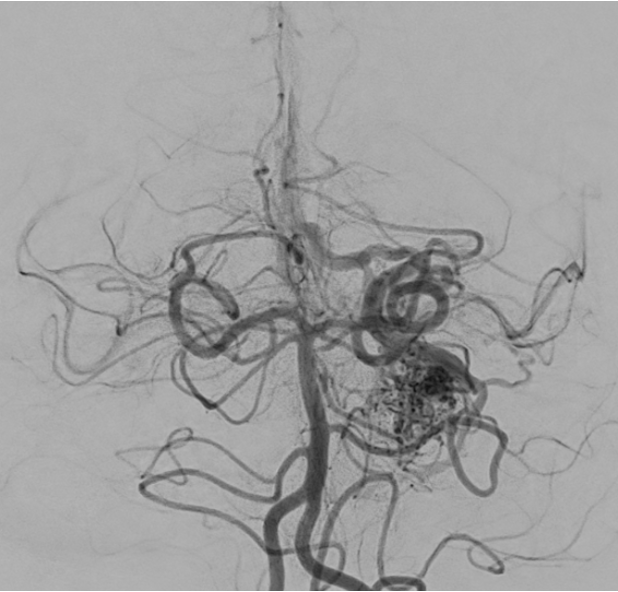
An arteriovenous malformation, or AVM, is a tangle of abnormal blood vessels where arteries connect directly to veins, skipping the tiny capillaries that normally slow blood down. Many people are born with them, and many only find out when a scan is done for headaches, a seizure, or something unrelated.
The main concern is bleeding. On average, an AVM that has never bled carries roughly a 1 to 3 percent chance of bleeding each year. That risk adds up over a lifetime, which is why your age and the AVM's specific features matter so much in deciding what to do.
Does mine need treatment?
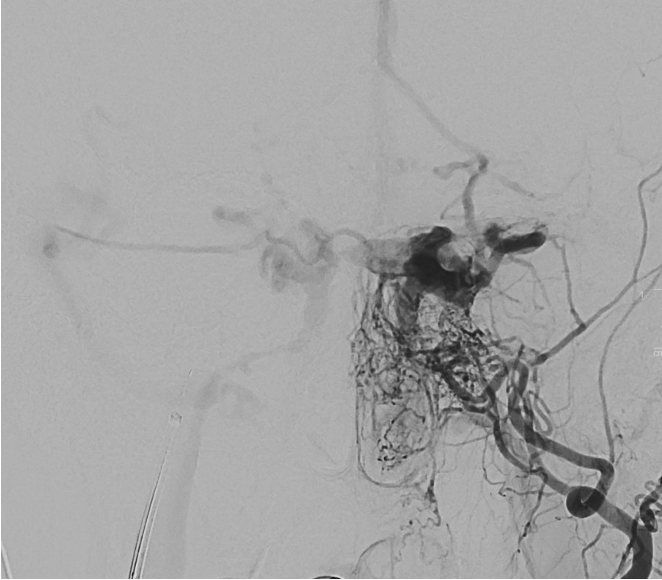
Not always. Large studies have shown that for some AVMs that have never bled, careful observation can be safer than treatment. Others, especially those that have already bled or have high-risk features, are better treated. The right answer depends on the AVM's size and location, how it drains, whether it has bled, and your age and goals.
I will lay out the risks of each path side by side, including watching and waiting, so you can make the decision that fits your life.
How are AVMs treated?
There are three main tools, and they are often combined. Embolization uses a thin catheter to fill the abnormal vessels from the inside with a liquid material that hardens in place. Surgery removes the AVM directly. Focused radiation (radiosurgery) closes it off gradually over a few years. As an endovascular neurosurgeon, I can treat with any of these options, so your plan is built around your personal case, not around any one technique.